Pay in installments of $5.45 with
 ,
,
 and
and

Shipping Estimate
USA
- USA
- CAN
- USA
- CAN
Ships within 48 hours · Estimated delivery Jun 28 - Jul 3
 Promo Codes Available:
For Your Every Summer RSVP, with Code: SUMMER15
Description
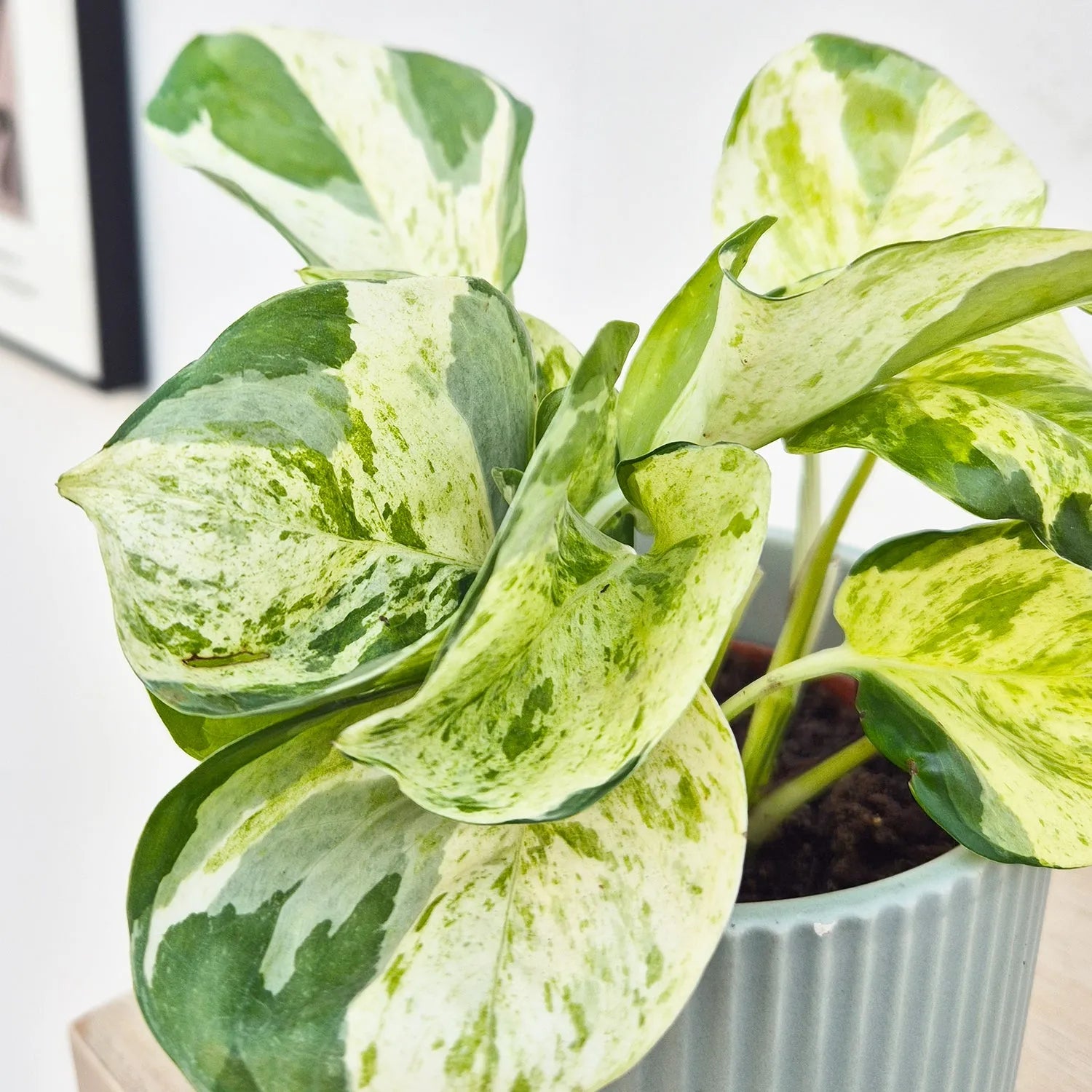
manjula pothos university of florida 15Epipremnum aureum Manjula, commonly known as Manjula Pothos, is a striking and highly sought after cultivar of Epipremnum aureum (Pothos). This beautiful plant is characterised by its broad, heart shaped leaves adorned with a mix of creamy white, silver, and green variegation. Unlike some other Pothos varieties, each leaf of Manjula is uniquely variegated, often displaying marbled patterns or bold streaks of colour. Developed by the University of
Epipremnum aureum ‘Manjula’, commonly known as Manjula Pothos, is a striking and highly sought-after cultivar of Epipremnum aureum (Pothos). This beautiful plant is characterised by its broad, heart-shaped leaves adorned with a mix of creamy white, silver, and green variegation. Unlike some other Pothos varieties, each leaf of Manjula is uniquely variegated, often displaying marbled patterns or bold streaks of colour.
Developed by the University of Florida, Manjula Pothos is a slow-growing variety compared to other Pothos plants but makes up for it with its breathtaking foliage. As a trailing or climbing plant, it can be grown in hanging baskets, trained on moss poles, or left to cascade down shelves.
Like other members of the Pothos family, it is low-maintenance and adaptable, making it an excellent choice for both beginners and experienced plant lovers.
Care Guide for Epipremnum aureum ‘Manjula’
Light Requirements
Manjula Pothos thrives in bright, indirect light but can tolerate lower light conditions. However, brighter light enhances its variegation.
- Ideal placement: Near an east- or west-facing window where it receives filtered sunlight.
- Artificial light: Grows well under LED grow lights.
-
Avoid:
- Direct sunlight, as it can scorch the leaves and fade variegation.
- Very low light, which can cause reduced variegation and leggy growth.
Temperature & Humidity
- Temperature range: 18–27°C (65–80°F). Keep away from cold drafts and temperatures below 12°C (54°F).
-
Humidity: Prefers 50% or higher, but it can adapt to normal household humidity.
- To enhance growth, place it near a humidifier or use a pebble tray.
- Occasional misting can help, but it is not required.
Watering
Manjula Pothos prefers its soil to dry out slightly between waterings. Overwatering is the most common cause of issues like root rot.
-
Watering schedule:
- Water when the top 2.5–5 cm (1–2 inches) of soil feels dry.
- Typically, this means watering every 7–10 days in summer and every 10–14 days in winter.
- Water quality: Tap water is usually fine, but if your water has high chlorine levels, use filtered or distilled water to prevent leaf browning.
- Method: Water thoroughly until excess drains out, but never let the plant sit in standing water.
Soil Requirements
A well-draining, airy potting mix is ideal for Manjula Pothos. A good mix includes:
- 50% potting soil
- 30% perlite (for drainage and aeration)
- 20% orchid bark or coco coir (to retain light moisture without compacting)
A standard Pothos or aroid mix also works well.
Fertilising
- Feed every 4–6 weeks in spring and summer with a balanced liquid fertiliser (diluted to half strength).
- Reduce fertilising in autumn and winter when growth slows.
- Avoid over-fertilising, as this can cause leaf burn.
Pruning & Maintenance
- Prune leggy vines to encourage bushier growth.
- Trim yellow or damaged leaves to maintain a healthy appearance.
- Wipe the leaves with a damp cloth to remove dust and enhance photosynthesis.
Pests & Diseases
Manjula Pothos is relatively pest-resistant, but it may attract:
- Spider mites & mealybugs – Wipe leaves with neem oil or insecticidal soap.
- Root rot – Caused by overwatering; ensure well-draining soil.
- Leaf browning or yellowing – Often a sign of inconsistent watering or too much direct sunlight.
Propagation
Manjula Pothos is easy to propagate through stem cuttings.
- Take a cutting with at least 1–2 nodes and a few leaves.
- Place in water, perlite, or soil for rooting.
- Keep in bright, indirect light and change water every 3–5 days if propagating in water.
- Roots should develop in 2–4 weeks, after which it can be transferred to soil.
Shipping Notes
- Free Standard Shipping on $100+ Orders to the USA.
- Except Preorder products are shipped in 48 hours.
- Delivery to the USA:
- Standard Shipping : 3-10 business days
- If time is of the essence, please consider selecting expedited delivery for faster service.
Exchange/Return Notes
- We offer a 30-day return/exchange service after receiving.
- Final sale items are not eligible for returns or exchanges.
- To process your return/exchange, please contact us at [email protected]
- Please click here for more details>>> Return & Exchange Policy